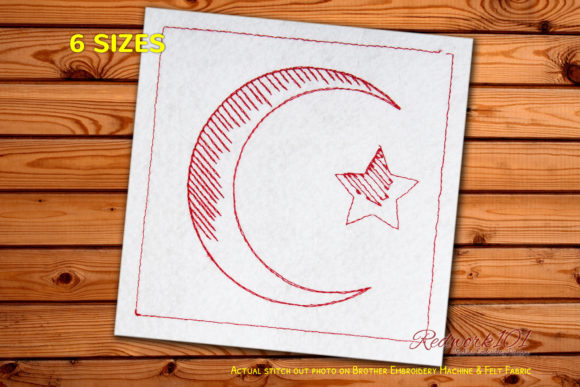
Crescent and Star Symbols Redwork for Embroidery Projects
When I first laid eyes on the Crescent and Star Symbols Redwork, it struck me as a design with quiet strength. It’s not over-the-top, flashy, or busy—it speaks in a soft but deliberate tone. As an experienced embroidery designer who regularly evaluates machine embroidery designs for real-world use, this one has a clear identity: it’s elegant, symbolic, and versatile enough to work across multiple product types while maintaining its integrity.
A Symbolic Design with Broad Appeal
The crescent and star are instantly recognizable symbols of faith and cultural heritage. The redwork style—monochromatic stitching using just one thread color—gives the design a classic, timeless feel. This makes it ideal for handmade products that aim to communicate sincerity and thoughtfulness, such as personalized gifts or custom apparel. While the outer box is often a different color (unless it's part of the actual motif), it adds structure and framing without overwhelming the central symbol.
I see this design fitting naturally into a variety of embroidery projects. Whether you're working on a sweatshirt embroidery, a tote bag design, or even a small embroidered patch, the crescent and star motif can add a meaningful touch. It works especially well for holiday gifts, nursery decor, or small shop merchandise where subtle symbolism enhances the product's story.
First Impressions and Visual Personality
Visually, the Crescent and Star Symbols Redwork feels grounded and respectful. Its layout is balanced, with the crescent curving gently around the star, suggesting harmony and unity. The level of detail is moderate—not too intricate to get lost in smaller formats, but still refined enough to stand out when given space.
This design doesn’t scream for attention; instead, it invites appreciation. That makes it perfect for personalized gifts and custom apparel where the focus is more on sentiment than bold branding. For craft business owners, this kind of understated elegance can be a big plus, especially if your brand values authenticity and tradition.
Real-Life Embroidery Performance
In practice, the Crescent and Star Symbols Redwork performs admirably. The lines are clean, the curves smooth, and the stitch paths follow logical patterns that minimize distortion. When stitched on medium-weight cotton, the design maintains its shape and clarity, which is essential for any machine embroidery design used in commercial or personal projects.
- Tote Bags: On a linen tote, the design becomes a focal point. The contrast between the red thread and the natural fabric is striking, making it a great choice for Etsy sellers looking to offer unique, meaningful items.
- Sweatshirts and T-Shirts: The motif looks best on the front chest area or center back, depending on the scale. A larger version would make a strong statement, while a smaller one could serve as a subtle accent.
- Baby Clothes and Aprons: The design brings a sense of calm and intentionality. On a baby blanket or onesie, it adds warmth and cultural significance without being too graphic for delicate items.
- Patches and Caps: For those creating embroidered patches, the crescent and star motif offers a good balance of coverage and simplicity. On curved surfaces like caps, careful placement is key to ensure the shape remains proportional and readable.
- Kitchen Towels and Pillow Covers: The redwork style works beautifully on white or light-colored linens. The design holds up through frequent washing, provided the right stabilizer is used and the fabric isn't overly textured or thin.
Where to Use It Carefully
While the Crescent and Star Symbols Redwork is adaptable, there are some limitations to consider. If you're planning to use it in a tiny hoop size, you may need to simplify the design or reduce its scale carefully. The fine details of the crescent and star could become muddied if the design is too compressed.
Textured fabrics, like denim or canvas, can cause the stitches to pucker or distort slightly. Thin or stretchy materials might require additional stabilizing techniques to keep the shape from warping. Dark backgrounds also pose a challenge unless the thread color is bright or contrasting. In these cases, testing on scrap fabric is a must before moving to production.
For commercial embroidery, always check the stitch density and overall coverage. If the design includes fill areas, they should be manageable for most machines, but high-density sections might require extra care to prevent shifting or puckering. Also, inspect how the design handles corners and edges—especially if you’re incorporating it into something like a printable mockup or digital product preview.
Design Impact on Customer Perception and Branding
As a reviewer, I’m always thinking about how a design affects customer engagement and trust. The Crescent and Star Symbols Redwork carries a sense of cultural reverence and aesthetic refinement. Used correctly, it can elevate a handmade product into something that feels intentional and well-crafted.
On personalized gifts, this design can convey deep meaning—especially when paired with names or dates. For small shop product lines, it helps establish a consistent visual language, particularly if your brand leans toward minimalist or traditional aesthetics. The design also adds value by appealing to customers seeking thoughtful, meaningful items rather than mass-produced decorations.
From a craft business standpoint, the crescent and star motif can help differentiate your products in competitive markets like Etsy or craft fairs. It’s not generic, so it stands out—but it’s also familiar enough to feel approachable. This duality is rare and valuable in design assets meant for sale or gifting.
Practical Tips for Embroidery Designers
Before committing to a large order of digital embroidery files, here are a few steps I recommend:
- Test on scrap fabric: Especially if you're using a non-standard material or color background.
- Check thread color contrast: Make sure the red thread stands out clearly against your chosen fabric.
- Review stitch density: High-density areas might need trimming or adjusting for specific machines.
- Confirm hoop size: Some versions of the design might require a larger hoop than expected.
- Inspect small details: Look closely at the tips of the crescent and the points of the star to ensure they remain sharp after stitching.
- Use proper stabilizer: Especially for lightweight or stretchy fabrics where stability is crucial.
- Compare light and dark backgrounds: See how the design reads visually on both ends of the spectrum.
- Test black and white mockups: This will give you a clearer idea of how the red thread interacts with the design layout.
- Confirm licensing before selling: Always double-check whether the design allows resale of finished items or digital product previews.
Final Thoughts for Makers and Entrepreneurs
The Crescent and Star Symbols Redwork is a solid addition to any embroiderer’s library. It’s not just a decorative element—it tells a story. And in today’s market, where buyers seek authenticity and emotional connection, that matters.
Whether you're designing a line of holiday gifts, crafting a boutique collection of nursery decor, or simply looking for a standout motif for your next embroidery project, this design deserves consideration. Just remember to treat it with the respect it demands: test thoroughly, adjust for your specific needs, and use it in ways that highlight its natural beauty.
With the right approach, the Crescent and Star Symbols Redwork can transform a simple item into something memorable—both for you as a creator and for the people who receive your finished product.